-
The presentation will show how a combination of virtual and physical testing can accelerate vehicle product development. Data generated by testing activities need to be managed and analysed properly to extract insights during the developemnt process. Only an integrated approach in which all testing activities are synchronised and integrated can truly speed up the development process.
- How virtual and physical testing activities can be aligned to speed up vehicle development
- The role of data in the vehicle development process
- What HBK offers to customers in terms of virtual and physical testing
-
For emerging urban aerial transportation vehicles such as drones and eVTOLs, the noise issue not only concerns their own safety but also affects the urban environment and public acceptance. This presentation will introduce the noise testing standards for eVTOLs in China and abroad, and demonstrate HBK's comprehensive capabilities by sharing the applications in well-known agencies.
- eVTOL noise measurement standard
- Applications for eVTOL field noise measurement
- HBK solutions for eVTOL noise measurement
-
The presentation will cover testing requirements for China Stage VII emission standards, independently developed core sensing technologies, comparative testing validation, and application case studies.
- Testing requirements for China Stage VII emission standards
- Independently developed core sensing technologies
- Comparative testing validation
-
Electrification is reshaping the architecture of automobiles. In particular, the collective evolution of NEV powertrain and intelligent chassis is at the forefront of intelligent transformation. While new chassis technologies such as brake- and steer-by-wire and active suspension are gaining attention, auto makers’ pursuit of high torque and dynamics in chassis-powertrain integration is facing tough challenges. As the EMB system sustains control through direct commands to motors, its reliability and NVH becomes the focus of development. The presentation will explore the challenges faced in the R&D and production stages of chassis powertrains and the role of NVH in enhancing product reliability and quality.
- R&D and production challenges of powertrains and intelligent chassis
- reliability and quality
- NVH technology
-
Accurate torque measurement is critical in EV/eVTOL powertrain testing to ensure efficiency, safety and performance validation. Real torque data reflects true mechanical loads, essential for optimizing electric drives, torque vectoring and smart chassis control. Challenges include high-speed rotating environments, EMI interference and complex multi-axis measurements. imcDAQ and wireless telemetry address these pain points with high-precision, isolated sensors, robust data acquisition and real-time wireless transmission, enabling dynamic testing under extreme conditions. Applications span EV powertrain durability, torque vectoring validation, smart chassis feedback control and eVTOL propulsion system testing, ensuring reliability in electrified mobility.
- Critical torque measurement for EV/eVTOL performance validation
- Overcoming high-speed rotation and EMI testing challenges
- Wireless telemetry benefits for real-time dynamic testing
- EV smart chassis and eVTOL propulsion test solutions
- DAQ/telemetry measuring challenges in vehicle/bench testing
-
As domestic OEMs place increasing emphasis on automotive EE architectures and upgrade to in-vehicle ethernet ring network architectures, performance testing of time-sensitive networking (TSN) for ethernet data transmission has become the most critical standard and cornerstone of architectural performance. This presentation will provide an in-depth yet accessible introduction to TSN testing solutions and key points, based on ZD's latest innovations – the DataGrabber TSN and VBT analysis software.
- Background and key testing points of TSN ring networks
- How to perform data injection and capture in TSN networks using professional equipment
- Interpretation of key aspects in message analysis under TSN network environments
- Analysis of network testing differences in the context of automotive global expansion trends
-
This presentation will outline the latest advancements and practical applications of the Intelligent Cockpit Cluster Test Management Platform (TESTBOT) and large model technology in improving testing efficiency. The company's objective is to introduce these cutting-edge solutions as a means to significantly enhance the automotive industry's testing processes, thereby promoting technological innovation and accelerating product development cycles.
- The cluster platform solution for efficiently managing the testing of a vast number of devices
- The core methods and achievements of large model technology in enhancing test efficiency
- Cutting-edge practical experience that empowers innovation and accelerated iteration in automotive testing
-
From software simulation (HIL) to hardware test benches (testing equipment), a full-scenario solution for intelligent chassis is achieved through the technical closed loop of physical testing and virtual verification. The presentation will cover the necessity of multi-degree-of-freedom testing for x-by-wire chassis, pain points in x-by-wire chassis testing, application of multi-degree-of-freedom testing technology for x-by-wire chassis, HIL testing system for intelligent chassis, and high-dynamic testing bench for intelligent chassis.
- The industry situation and development trends of intelligent chassis
- The necessity for and testing methods of multi-degree-of-freedom testing for intelligent chassis
- The principles of HIL testing for intelligent chassis and the principles of high-response testing benches
-
The presentation will introduce global brake emission standards, global brake emission standards trends and AVL's brake emission measurement solution.
- Global brake emission standards
- Standards trends
- AVL brake emission measurement solution
-
As automotive networks evolve toward zonal architectures, engineers face new challenges in testing and validation. This session explores how 10BASE-T1S – a multi-drop ethernet standard – enables scalable, deterministic communication at the edge of the vehicle. Attendees will learn how to adapt their validation workflows. Real-world examples will showcase how Technica Engineering’s tools are used to simulate and validate 10BASE-T1S networks in lighting, sensor and actuator domains. Whether you're designing next-gen E/E systems or optimizing test setups, this session offers actionable insights to futureproof your engineering strategy.
- The role of 10BASE-T1S in modern vehicle networks
- How to adapt testing and validation for 10BASE-T1S
- Real-world use cases and deployment insights
-
Combined with the application of automobile steering test, this presentation will introduce the structure and performance parameters of Moog's new-generation steer-by-wire electric test system.
- Application introduction of steer-by-wire durability testing, performance testing and mHIL testing
- Compared with the test data of traditional hydraulic steering test bench, the advantages and disadvantages are explained
- Introduction to the CAN/CAN FD communication functions and control with steer by wire
-
Development of internal combustion engines that utilize alternative fuels to achieve carbon neutrality, and compliance with the upcoming stricter emissions regulations are essential. To contribute to them, Horiba has developed a new-generation compact emissions analyzer, MEXAcube, based on the company's unique Quantum Cascade Laser-Infrared Spectroscopy (QCL-IR) IRLAM. It can measure nine components such as CO2, NO, N2O, NH3 and HCHO under both laboratory and real driving conditions. This presentation introduces an outline of MEXAcube and its measurement performance capability with actual testing results. In addition, Horiba proposes improvement of R&D efficiency and cost-effective solutions.
- Advantages relating to the measurement performance of MEXAcube
- MEXAcube's useful new features for emissions testing
-
This presentation will provide an overview of the automotive Ethernet 10BASE-T1 network layout, operation and testing.
- Background of 10BASE-T1S
- Advantages of 10BASE-T1S
- 10BASE-T1 basics
- Comparison of 10BASE-T1S with other popular automotive networks
- Intrepid Control Systems tools for 10BASE-T1S
-
This test system simulates an OTA cloud server to create software upgrade tasks, performing functions such as software package detection, verification and distribution. It uses a signal shield to simulate various network conditions, including strong signal, weak signal and disconnection. In compliance with ISO 24089 and GB 44496 standards, the system invokes the HMI interface to graphically display the OTA workflow. It conducts comprehensive testing, including precondition checks for OTA upgrades, software flashing process testing, performance testing, stress testing, stability testing and failure mode testing.
- International and domestic standards introduction
- OTA testing scope
- OTA test system architecture
- OTA HIL testing solution
-
For the end-to-end NOA systems in autonomous driving, performance validation and reliability assurance constitute critical prerequisites for achieving large-scale deployment. Serving as the strategic cornerstone of validation architecture, simulation testing not only continuously empowers technological evolution, but also establishes systematic verification infrastructure for the emerging 'enhanced perception, streamlined mapping' algorithmic paradigm. High-fidelity sensor simulation modeling, comprehensive digital twin reconstruction, multidimensional scenario libraries and a full-chain verification framework constitute four foundational pillars of end-to-end simulation testing, delivering full lifecycle assurance for NOA systems' functional safety and safety of the intended functionality (SOTIF).
- Sensor simulation
- High-fidelity simulation scenarios
- Closed-loop NOA simulation testing
-
This presentation will explore NGI's technological innovations in intelligent electric vehicle testing. It will begin with an introduction to NGI's professional background and core capabilities in automotive electronics testing and control, before analyzing the key challenges in testing intelligent electric vehicles, focusing on NGI's innovative testing solutions.
- The core testing challenges and industry standards for electric vehicles: the industry standards for key testing areas such as ECU and BMS
- NGI's innovative testing solutions: how NGI enables efficient testing across the entire intelligent electric vehicle industry chain
- The practical implementation and cost-effectiveness of NGI's testing technologies: the technology path through application scenarios
-
The presentation will offer an introduction to XIL testing methods for chassis system development; virtual testing methods for model-based development; HIL testing for steering, braking and suspension systems; driving experience testing in the laboratory environment; and data close-loop in XIL testing.
- How to build up a virtual testing environment for chassis system testing
- How to use HiL test benches for steering, braking and suspension system test
- How to compare the testing data with your design goal
-
Mercedes-Benz analyzes the smallest vehicle movements in order to perfect the driving characteristics typical of the brand. Hear how the slip angle helps with this and which sensors are used. One critical parameter in vehicle tuning is the vehicle's slip angle. This angle represents the difference between the vehicle's longitudinal axis and the velocity vector at a defined point of measurement. It provides valuable insights into tire and axle characteristics and general stability criteria. With advanced chassis systems such as rear-wheel steering, the measured slip angles can become very small. High resolution and accuracy are essential.
- Vehicle dynamics measurements at Mercedes-Benz
- Slip angle – how to measure
- What accuracies are possible
- Which technology is best suited for measuring the slip angle
- User-friendly operation and integration into existing systems
-
Driven by global energy transformation and the 'dual carbon' strategy, China's new-energy vehicle industry is rapidly developing with innovation as the engine. With the continuous breakthroughs in electrification and intelligent technology, the industry has put forward higher requirements for the reliability, safety and testing efficiency of core components. As a leader in testing solutions in the field of new energy, Itech Electronic has always focused on the forefront of industry technology, empowering the upgrading of the industry chain with high-precision, intelligent testing equipment. This presentation will discuss the development trends of China's automotive industry, systematically showcase our company's innovative test cases in key areas such as electric drive systems, power batteries, charging facilities and high-voltage components, and analyze how cutting-edge technologies such as waveform analysis for automotive electronic networks can improve the quality and efficiency of the industry. We look forward to exploring the future direction of new-energy vehicle testing technology with you, injecting new momentum into the high-quality development of the industry.
- Development and prospects of the automotive industry
- Test case of electric drive motor and power battery
- Test cases of charging stations and vehicle chargers
- High-voltage electronic component testing case
- Curve waveform for automotive electronic network
-
This presentation explores advanced testing technologies for new energy vehicle EIC systems, focusing on power HIL and coordinated testing methods based on ISO26262 standards.
- Functional safety verification: How to implement power HIL and coordinated testing to meet ISO26262 requirements, enhancing vehicle safety
- Innovative testing platform: The modular power HIL testing platform and its unique capabilities in simulating complex real-world conditions
- Efficiency and cost benefits: How the testing solution improves efficiency, shortens development cycles and reduces costs
- Market and strategic value: Insights into the growing NEV market, the role of testing in gaining a competitive edge, and the positive impact it has
-
The advent of Generative AI and large language models (LLMs) has sparked significant enthusiasm regarding their potential to revolutionize business operations across various sectors. However, the practical implications of AI for the automotive industry warrant a closer examination. This session delves into the technologies, their prospective applications and their current readiness for integration into automotive innovations, from electric vehicles to software-defined vehicles and beyond. Attend to gain insights into the challenges of deploying AI in the automotive sector to make thoughtful decisions in a safety-critical environment.
- How AI will impact the auto industry
- AI prospective applications in automotive innovations
- What Keysight can offer in the AI market trend
-
EOL testing is an important step in vehicle production and manufacturing to ensure that the software version of the ECU is correct before leaving the factory, and the parameter configuration is consistent with the design requirements. There are new requirements for the EOL system, especially for SDV. The EOL system of Windhill Technology is based on the OTX international standard to achieve the sequence of flashing, calibration, testing and diagnosis. The software can run across different platforms and support various types of flashing protocols. Furthermore, it is easy to maintain.
- The requirements of software-defined vehicles for end-of-life (EOL)
- How to use OTX to implement the sequence of flashing, calibration, testing and diagnosis
- Advantages of the EOL system based on OTX
- How to implement flashing under different protocols such as DoIP, DoCAN, J1939 and private protocols
- Intelligence – iIntegrating with existing systems
-
Measurement microphones, despite their precision, inherently alter the sound field due to reflections and diffractions caused by their size and shape. This challenge becomes critical in car cabins, where non-ideal acoustic environments – defined by complex materials and confined spaces – compromise test reliability. Smaller microphones, optimized for such environments, offer solutions but also introduce new hurdles. Additionally, the growing use of microphone arrays and artificial heads to characterize automotive audio systems presents unique challenges. Delve into the intricacies of in-cabin acoustic measurements, explore cutting-edge solutions and consider the evolving demands of automotive audio testing. Don’t miss it!
- Measurement microphone effects on sound fields
- The benefits of smaller microphones in minimizing sound field interference
- Limitations of microphones designed for ideal acoustic environments
- Choosing microphones for non-ideal conditions like car cabin tests
- Microphone arrays and artificial heads challenges in automotive audio tests
-
As smart vehicles proliferate, low-cost, high-performance millimeter wave radars are now mainstream perception sensors. However, the surge in radar-equipped vehicles has intensified on-road electromagnetic congestion, significantly increasing mutual interference risks that jeopardize autonomous decision-making reliability – a critical industry challenge. This presentation addresses millimter wave radar interference mechanisms, analyzing sources and patterns in typical scenarios: inter-vehicle interference during driving, overtaking and parking, along with complex clutter interference in tunnels and urban environments. It also introduces the newly developed anti-interference testing solution, which enables comprehensive simulation of multiradar collision scenarios and real-world electromagnetic disturbances to enhance sensor robustness for safe autonomous operations.
- Develop a systematic understanding of typical interference challenges in millimeter wave radar large-scale commercialization
- Grasp industry-aligned priorities– the core requirements and evolutionary trends in radar anti-interference testing
- Explore Racobit cutting-edge millimeter wave radar test solutions, technical breakthroughs and competitive advantages in interference resilience validation
- Acquire actionable interference testing methodologies with implementation pathways to enhance millimeter wave radar product robustness

August 26–28, 2026
Shanghai World Expo Exhibition and Convention Center
August 26–28, 2026
Shanghai World Expo Exhibition and Convention Center
Automotive Testing China Innovation Showcase



















Interested in becoming a partner or sponsor?
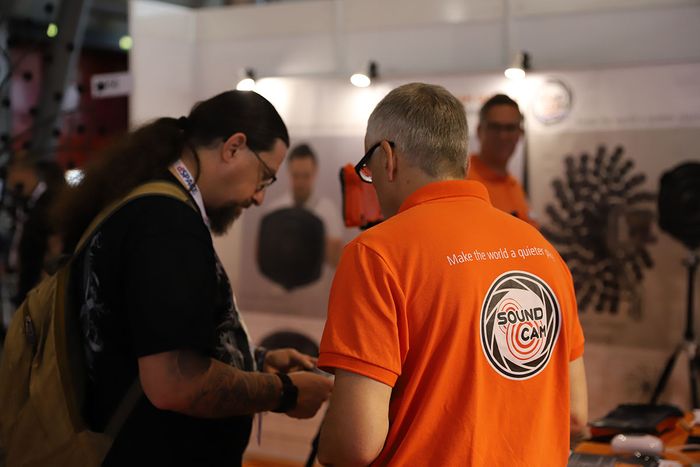
Become a Sponsor and unlock unique commercial opportunities. With a diverse audience of industry professionals, thought leaders, and innovators, this is the perfect platform to position your brand and gain unparalleled visibility, credibility, and access to a targeted network of decision-makers. We offer a variety of sponsorship packages to suit your needs, from exclusive title sponsorships to customizable options. Each package is designed to maximize your exposure and impact before, during, and after the event.